

Sexual Health and Wellbeing
The Scottish Government funding researchers at University of Glasgow to develop a definition of ‘sexual wellbeing’ as distinct from ‘sexual health’. You can find out more here:
The study defined sexual wellbeing as “feeling respected, safe, at ease and supported, while also having a sense of self-worth and agency in relation to sex and sexuality”
Sexual wellbeing means feeling respected, safe, at ease and supported, while also having a sense of self-worth and agency, in relation to sex and sexuality.
Sexual wellbeing is integral to consensual, healthy and pleasurable sexual experiences and relationships.
A person’s sexual wellbeing is continually influenced by their environment, including sexual partners, family, peers, education and health systems, media, laws, faith-based and cultural norms.
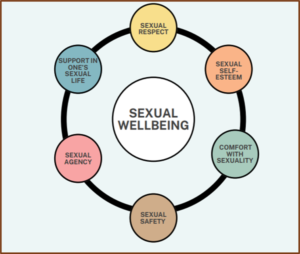
And further developed key domains of sexual wellbeing:
- Sexual self-esteem: Valuing self as a sexual person including worthy of enjoying one’s sexuality
- Comfort with sexuality: Feeling at ease with sex and sexuality and not embarrassed or ashamed.
- Sexual respect: Feeling positively regarded as a sexual person including feeling accepted.
- Sexual agency: Freedom and capacity to choose positive, consensual and pleasurable sexual experiences.
- Sexual safety: Feeling safe from sexual harassment, sexual exploitation and sexual violence.
- Sexual support: Access to resources that enable positive experiences of sex and sexuality including accurate, comprehensive and non-judgemental sexual health information and services.
Compulsive Sexual Behaviour Disorder (CSBD)
Compulsive Sexual Behaviour Disorder (CSBD) are also referred to as Sex Addiction or Porn Addiction. Please note that we do not offer treatment for CSBD at Chalmers Centre.
CSBD is an impulse control disorder identified by repetitive sexual behaviours which can cause distress and impact on daily functioning. CSBD can also lead to risk taking and harmful behaviour.
CSBD can also change people’s view of what a positive sexual relationship or experience can be. This can then cause other sexual dysfunctions e.g. erectile dysfunction and make it difficult for people to form healthy personal relationships.
Treatment of CSBD should be person-centred and work towards the person’s aims rather than being shaming or judgemental.
For many people sexual behaviours can be used for self-soothing, managing stress and anxiety or trauma or coping with low self confidence. Treatment can involve exploring other coping strategies for life’s difficulties so that sex and masturbation are associated with pleasure and arousal.
We would recommend that you find a support system which works for you and that you work with a therapist specifically trained in CSBD.
You can access the Compulsive Sexual Behaviour Scale (CSBD-19) validated screening measure based on the diagnostic criteria for CSBD in ICD-11 here (link to: https://thelaurelcentre.co.uk/resources/am-i-a-sex-addict/
If you are concerned about other substance addiction please see: (with websites hyperlinked to Smart Recovery https://smartrecovery.org.uk/ , Crew https://www.crew.scot/ , Change Grow Live (CGL) https://www.changegrowlive.org/ and specific chemsex information here https://www.changegrowlive.org/advice-info/drugs/chemsex , Edinburgh Alcohol and Drug Partnership https://www.edinburghadp.co.uk/